Navigating Christmas Celebration with a Holiday Eating Non-Diet Approach
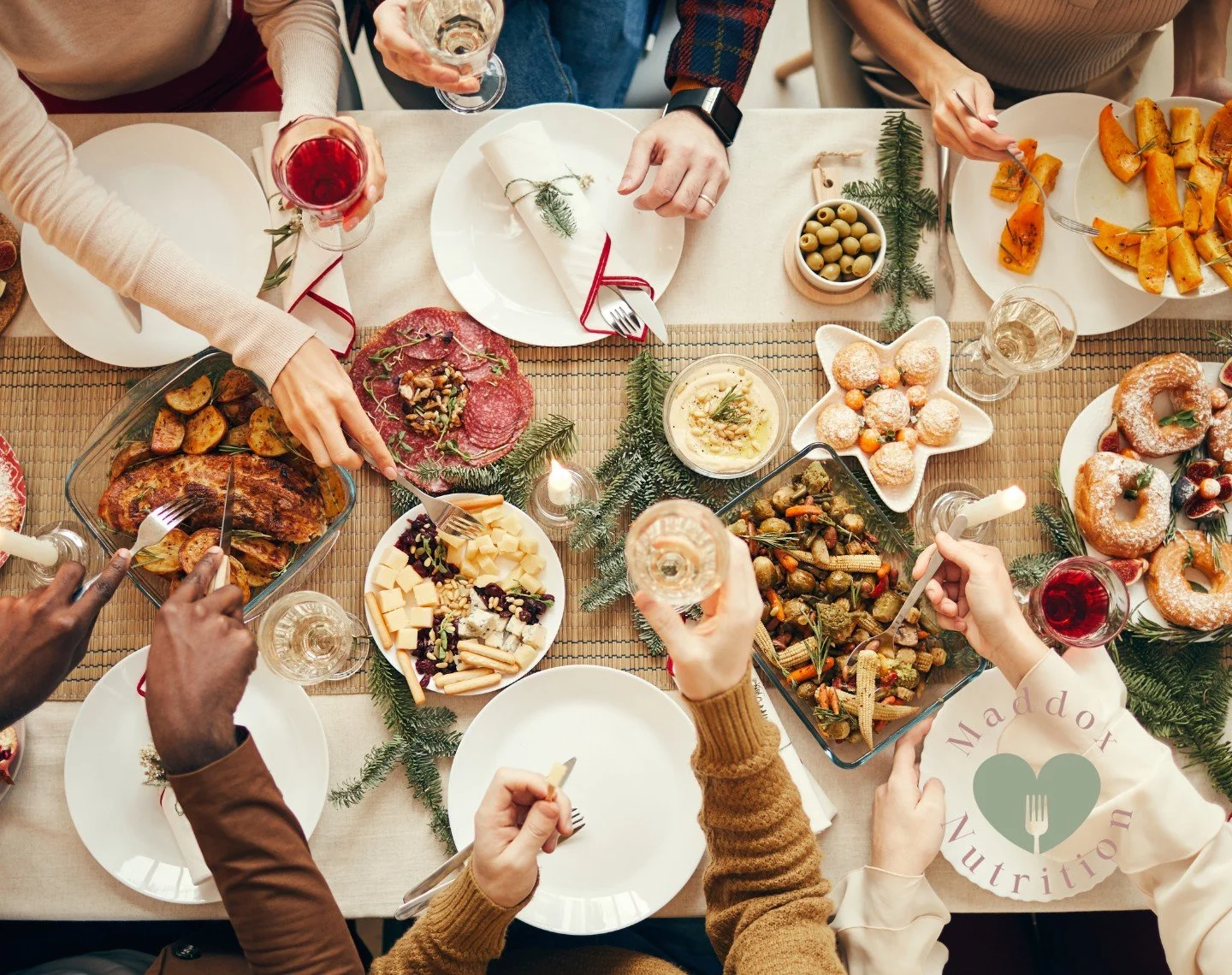
The holiday season brings with it the promise of joy, connection, and celebration. Yet for those who experience distorted views of eating, an eating disorder, or disordered eating patterns, the festive season can feel like a battleground.
The pressure to “eat right,” resist temptations, or control your body often overshadows the simple pleasure of sharing a meal with loved ones. This is why embracing a holiday non-diet approach can transform your experience of Christmas.
You deserve a holiday season where food does not trigger fear or guilt but nourishes both your body and your spirit.
The best holiday diet is NO DIET
Diet culture loves to sneak into the holidays disguised as good intentions. Promises to “stay on track,” “make better choices,” or “compensate for treats” often lead you down a path of restriction and shame.
A 2024 national survey by Orlando Health found that nearly 40% of Americans worry about how much they eat over the holiday season, and about one in four people believe they should skip meals to “save calories” before a holiday meal. That’s a common dieting strategy that actually increases the risk of anxiety and binge eating around food rather than reducing it.
But here is the truth you might need to hear: The best holiday diet is no diet.
Rejecting dieting during the holidays means you stop measuring your worth by what or how much you eat. You stop policing your body, your food, or your enjoyment. You stop trying to control something as natural as eating and instead listen to your body’s wisdom.
This is the core of a holiday non-diet approach. It frees you to honor your hunger and fullness, savor special foods, and enjoy celebrations without the burden of guilt or anxiety.
Non-Diet Tips to Enjoy Eating This Christmas Season
The Christmas season often magnifies food rules, body checking, and pressure to “do it right.” For those healing from eating disorders or disordered eating, this can feel exhausting and destabilizing.
Here are some of the ways you can support your body and mind while navigating holiday meals, family gatherings, and seasonal expectations without falling back into dieting behaviors.
Take care of your body’s needs
Eating regularly throughout the day matters, even on days with large or celebratory meals.
Skipping meals earlier often leads to intense hunger later, which can increase anxiety around food and make eating feel chaotic rather than supportive.
You can honor your hunger by keeping a consistent eating rhythm.
When your body feels nourished, you are more likely to approach holiday foods with clarity, intention, and calm rather than urgency or fear.
Let go of “good” and “bad” food labels
One of the most damaging parts of diet culture is the classification of food into “good” or “bad.” This black-and-white thinking fuels guilt when you eat certain foods and can drive secretive or binge eating.
In a holiday non-diet approach, all foods have a place. Christmas cookies, buttery mashed potatoes, or even that second plate of pie can be enjoyed without shame. These foods are part of traditions, memories, and celebrations, not enemies to be feared.
You might find that when you allow yourself to enjoy all foods, the intensity of cravings decreases over time. No food becomes forbidden, and your relationship with eating softens.
Set boundaries around diet talk
Holiday gatherings often become hotspots for diet talk. Comments about weight, body shape, and food restrictions are common. Hearing such talk can trigger negative feelings or reinforce harmful beliefs about your body and food.
You can protect your peace by setting gentle but firm boundaries. When conversations turn to dieting or body policing, try redirecting the topic or expressing your needs honestly.
This can feel uncomfortable, but remember that your mental health and healing come first. You are allowed to prioritize your well-being over uncomfortable conversations.
How You Can Prepare for Holiday Gatherings
Below are more ways you can prepare for holiday events in a way that honors your recovery, reduces anxiety, and helps you stay grounded around food and social dynamics.
Anticipate emotional triggers
As previously mentioned, family dynamics, stress, and unspoken expectations often surface in ways that impact your eating patterns, body image, and sense of safety. You must acknowledge that at one point or another, you will be triggered. Knowing this ahead of time allows you to prepare with intention rather than reacting in the moment.
Before gatherings, consider writing down what might feel challenging for you. Planning responses or coping strategies ahead of time gives you a sense of control without resorting to restriction or avoidance.
When someone comments on your body or appearance → “Honestly, I’m just trying to enjoy the day without all the talk about bodies.”
When diet talk comes up at the table → “I am taking a break from diet conversations. I am working on having a healthier relationship with food.”
When you feel pressured to eat more than feels comfortable → “Thanks, I’m good for now. I’m just eating what feels right for me.”
When you feel pressured to restrict or skip certain foods → “I’m actually letting myself enjoy everything this season. It’s been really helpful for me.”
When comments feel overwhelming or personal → “Excuse me for a minute, I just need to step away and breathe.”
These responses don’t have to be perfect. They’re just ways to protect yourself and keep things calm. You don’t owe anyone an explanation or debate. Your feelings and boundaries matter most.
Focus on connection over food
Food often takes center stage during celebrations. But the real purpose of these gatherings is connection with family, friends, and community.
You can practice shifting your attention away from the food itself and toward the people around you. Engage in conversations, share stories, laugh, and create memories that last longer than the meal.
Include movement and rest
Stress levels rise during the holidays, which can impact your eating patterns. Incorporating gentle movement like walks, stretches, or dancing can help ease stress and improve mood.
Rest is equally important. You might find that prioritizing sleep and downtime improves your ability to regulate emotions and resist old dieting habits.
Ways to Manage Challenges with Mindfulness and Self-Respect
Even with preparation, challenges can still arise. Unsolicited side comments from relatives or visitors about your body or strong emotions around food may surface.
Managing these moments through mindfulness and self-respect helps you respond with care rather than falling back into old coping patterns.
Honor your hunger and fullness
Eating with awareness is a cornerstone of the holiday non-diet approach. You can tune in to how hungry you feel before starting your meal and check in as you eat.
When you feel comfortably full, you can stop. It is okay to leave food on your plate or save some for later. This practice strengthens your trust in your body’s cues and helps you avoid discomfort.
Let go of the scarcity mindset
You might believe that holiday foods are only available once a year, creating pressure to “eat it all now.” This scarcity mindset drives overeating and anxiety.
Remind yourself that many recipes can be made again anytime. Leftovers can be enjoyed the next day or frozen for later. This knowledge reduces urgency and supports a more relaxed approach to holiday eating.
Seek support when needed
Navigating the holidays with disordered eating can feel isolating. Seeking support from a Registered Dietitian who specializes in non-diet, intuitive eating, or eating disorders can make a huge difference.
These professionals can help you create personalized strategies, work through emotional triggers, and build a healthier relationship with food and your body.
Practice self-compassion this holiday season
The holiday season is a perfect time to practice self-compassion and challenge harmful food rules. Embracing a holiday non-diet approach encourages you to experience food as nourishment and joy without judgment.
This Christmas, choose freedom over fear. Choose kindness over criticism. Choose to celebrate yourself just as you are.
Ready for gentle, professional support this holiday season?
Maddox Nutrition is a group of ED specialized dietitians with a compassionate, weight-neutral approach for individuals living with eating disorders, disordered eating, and long-standing food struggles.
We are not going to rush you. Healing does not need pressure, timelines, or perfection. Our work together moves at your pace, with respect for your history, your nervous system, and your lived experience.
If the idea of a holiday eating non-diet approach resonates with you, we invite you to reach out or contact us, and we will be in touch with you shortly.
Let this season be the start of something gentler!
–
What you need to know
The difference between a Dietitian and Nutritionist
A dietitian is a regulated healthcare professional who has completed formal education in nutrition and dietetics, undergone supervised training, and is licensed to provide medical nutrition therapy for conditions such as diabetes, eating disorders, or gastrointestinal issues.
The title “dietitian” is legally protected in many countries, ensuring that only those who meet strict professional standards can use it.
In contrast, the title “nutritionist” is not always regulated, meaning anyone can call themselves a nutritionist regardless of training, though some may hold advanced degrees or certifications. Generally, dietitians are qualified to offer clinical nutrition care, while nutritionists often focus on general wellness and healthy lifestyle guidance.