Is Body Dysmorphia a Symptom of an Eating Disorder?
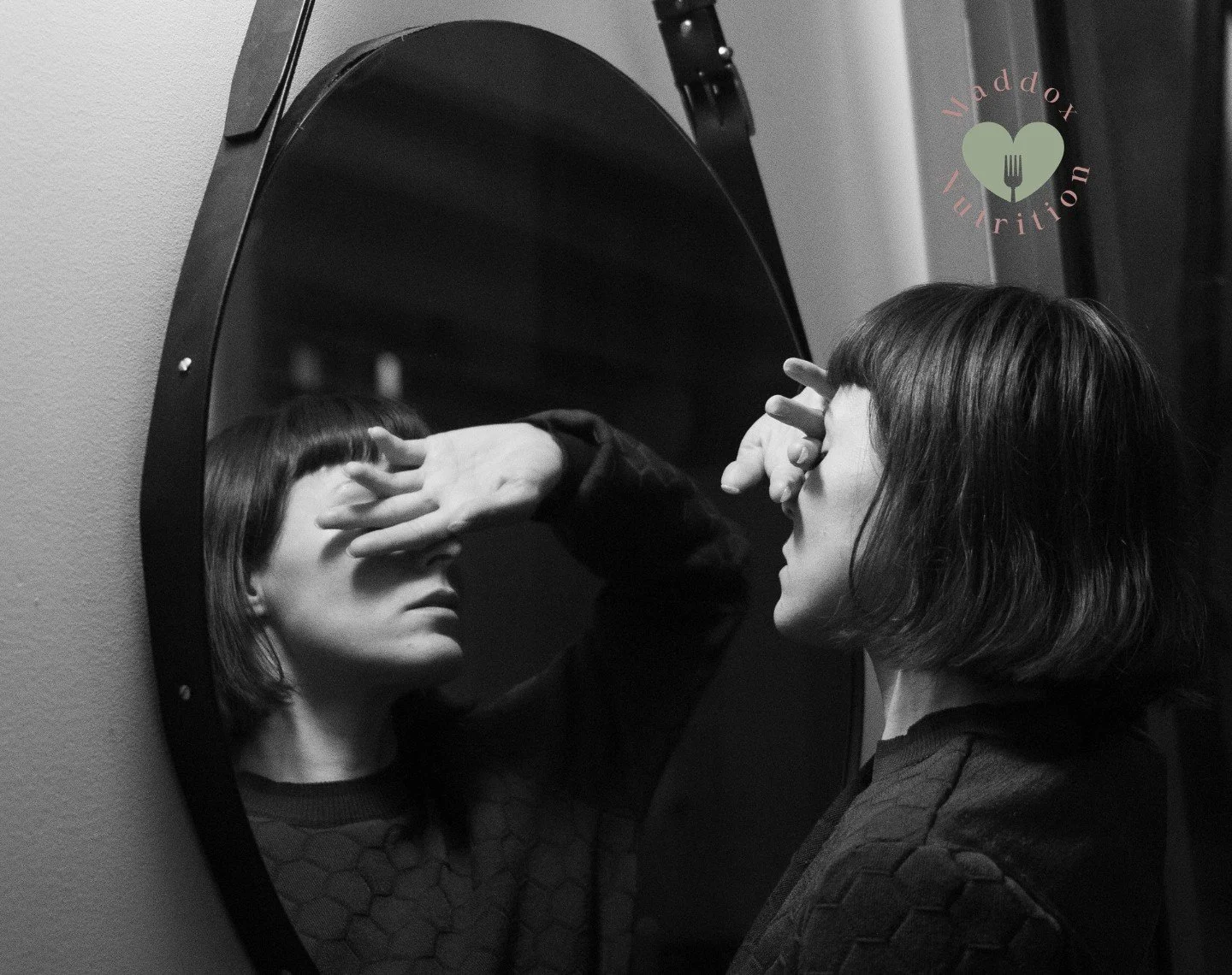
If you’ve ever found yourself obsessing over how a part of your body looks, checking the mirror repeatedly, avoiding photos, changing your clothes to hide certain features, or feeling consumed by thoughts about your appearance, you may wonder: Is body dysmorphia a symptom of an eating disorder?
The answer is more complicated than a simple yes or no.
Body dysmorphia and eating disorders are different mental health conditions, but they can share many symptoms and can occur at the same time. Body dysmorphic disorder (BDD) is not classified as an eating disorder. Instead, BDD is classified in the obsessive-compulsive and related disorders category in the DSM-5.
Understanding the difference matters because the thoughts, behaviors, and types of support involved can look similar on the surface while having different underlying patterns.
What Is Body Dysmorphic Disorder?
“Body dysmorphia” is a term people commonly use to describe intense distress about their appearance. Clinically, the condition is called body dysmorphic disorder (BDD).
BDD involves excessive preoccupation with an imagined appearance flaw or an unusually intense concern about a slight physical difference. The concern can become so consuming that it interferes with everyday life. The perceived flaw can involve almost any part of the appearance, including the skin, hair, nose, teeth, face, jaw, stomach, thighs, or other areas. For some people, the concern may shift from one body part to another.
Someone experiencing BDD may spend a significant amount of time thinking about a perceived flaw and may feel driven to perform repetitive behaviors in response.
These can include:
Frequently checking mirrors or reflective surfaces
Taking or retaking selfies to examine a perceived flaw
Comparing their appearance with other people
Asking others repeatedly for reassurance about how they look
Covering or camouflaging a perceived flaw with clothing, makeup, hairstyles, or other methods
Avoiding photographs, social situations, or activities because of appearance concerns
Spending excessive time grooming or trying to “fix” a perceived imperfection
Seeking cosmetic, dermatological, dental, or other procedures to change the feature
Is Body Dysmorphia Considered an Eating Disorder?
No. Body dysmorphic disorder is not an eating disorder.
BDD and eating disorders are separate diagnoses, even though they can have significant overlap.
One important distinction is what the appearance concern is centered around.
In BDD, a person is typically preoccupied with one or more perceived defects or imperfections in their appearance. As mentioned, the concern may involve a specific feature such as the nose, skin, hair, teeth, or face, although body shape and weight can also become areas of concern.
In eating disorders, body image concerns are often more closely connected to weight, shape, eating, and food. Depending on the eating disorder, symptoms may involve cycles of restriction, binge eating, compensatory behaviors, or other patterns involving food and eating.
This distinction isn't always obvious, though. A person with an eating disorder may become intensely focused on a particular part of their body.
Is Body Dysmorphia a Symptom of an Eating Disorder?
Body dysmorphia itself is not a symptom that automatically means someone has an eating disorder BUT body dysmorphic symptoms and eating disorder symptoms can overlap, and a person can experience both conditions.
For example, someone with an eating disorder might experience intense distress about their body size or shape. They may repeatedly check their body, avoid mirrors, compare themselves with others, or feel shame about their appearance.
Someone with BDD may also mirror-check, compare themselves, seek reassurance, take excessive photos, or avoid situations where other people might see them.
So, if the behaviors look similar, how can you tell the difference?
For someone with BDD, the preoccupation tends to center on perceived appearance flaws and the need to fix, hide, or correct them.
For someone with an eating disorder, concerns may be more strongly tied to food, eating behaviors, weight, shape, or fears surrounding changes in the body.
However, note that these experiences can overlap considerably.
A study published in the International Journal of Eating Disorders found that 32.5% of people with BDD had a lifetime history of an eating disorder. Within that group, 9% had anorexia nervosa, 6.5% had bulimia nervosa, and 17.5% had an eating disorder classified at the time as EDNOS (now generally understood within the broader category of OSFED). As this study was published in 2005, it’s safe to assume these numbers are now considerably higher considering the effects of social media, GLP-1 medications for weight loss, and other sociocultural influences on eating disorders over the last two decades.
This is an important finding because it shows that severe body image concerns should not automatically be placed into one category. A person may be dealing with an eating disorder, BDD, or both at the same time.
How Do BDD and Eating Disorders Differ?
Although there is overlap, the focus of the thoughts and behaviors can provide an important clue.
Body Dysmorphic Disorder (BDD):
Preoccupation with perceived flaws or imperfections in appearance
May focus on skin, hair, nose, teeth, face, or another body feature
Repetitive checking, comparing, grooming, camouflaging, or reassurance seeking
Cosmetic or other appearance-changing procedures may be pursued
Eating Disorder:
Disturbances involving food, eating, weight, and/or body shape
Often involves concerns about weight, shape, or body size, depending on the type of eating disorder
May involve restriction, binge eating, purging, or other eating disorder behaviors
Behaviors may be aimed at changing body size/shape through eating or compensatory behaviors
Important note: It’s important not to assume that someone has one condition based on a single symptom.
Get the Support You Need for Body Image Concerns and Recover From Eating Disorders
If you are struggling with body image concerns, you don't have to wait until your relationship with food or your body becomes “bad enough” to ask for help. Waiting until you are “sick enough” is often too late for your mental and physical wellbeing.
Our team at Maddox Nutrition provides outpatient nutrition counseling for eating disorders and non-diet nutrition counseling and virtual nutrition support in multiple states. We take a weight-neutral approach that does not rely on dieting, weight loss goals, body shaming, or the idea that you need to change your body to deserve care.
While we’re not therapists, we collaborate with your therapist or help you find a trusted therapist to join your team. Maddox Nutrition can help you work toward a more peaceful and flexible relationship with food while coordinating with other professionals when mental health support is needed.
Visit Maddox Nutrition at maddoxnutrition.co to learn more about our eating disorder and non-diet nutrition counseling services and explore whether working with a registered dietitian nutritionist could be a helpful next step for you.
–
What you need to know
The difference between a Dietitian and Nutritionist
A dietitian is a regulated healthcare professional who has completed formal education in nutrition and dietetics, undergone supervised training, and is licensed to provide medical nutrition therapy for conditions such as diabetes, eating disorders, or gastrointestinal issues.
The title “dietitian” is legally protected in many countries, ensuring that only those who meet strict professional standards can use it.
In contrast, the title “nutritionist” is not always regulated, meaning anyone can call themselves a nutritionist regardless of training, though some may hold advanced degrees or certifications. Generally, dietitians are qualified to offer clinical nutrition care, while nutritionists often focus on general wellness and healthy lifestyle guidance.